Address
304 North Cardinal St.
Dorchester Center, MA 02124
Work Hours
Monday to Friday: 7AM - 7PM
Weekend: 10AM - 5PM
Address
304 North Cardinal St.
Dorchester Center, MA 02124
Work Hours
Monday to Friday: 7AM - 7PM
Weekend: 10AM - 5PM
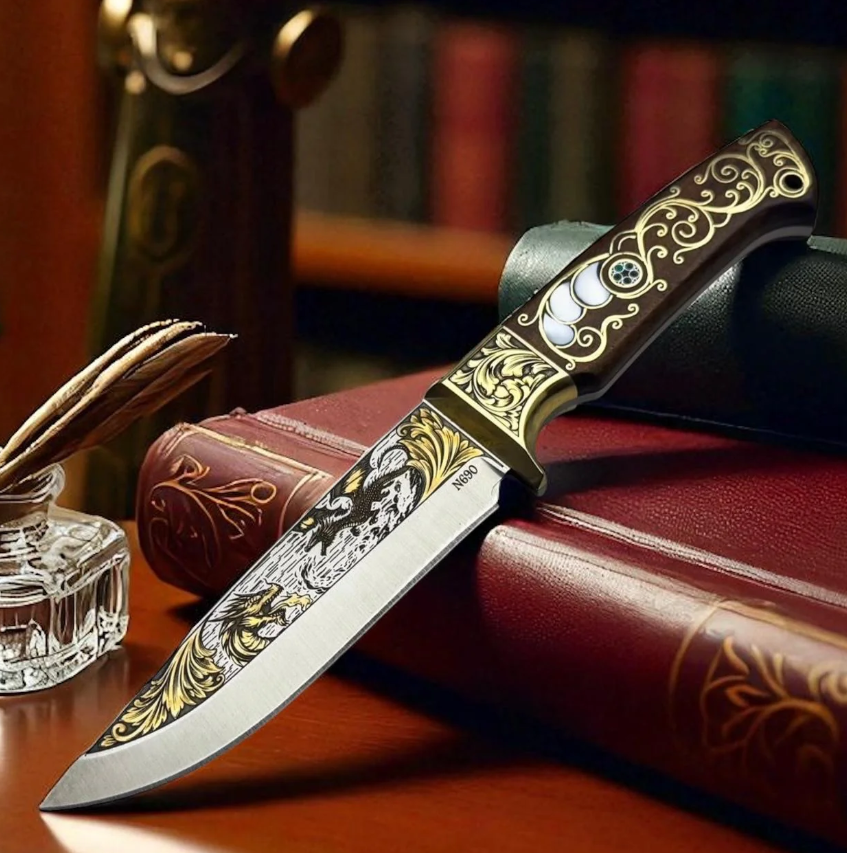
Street art trains you to read the city as a sequence of surfaces. A blank concrete wall, a shutter, a train car – all of them are invitations for color, pattern, and story. For some artists and collectors, that mindset continues off the street and into their pockets, where custom knives become another kind of canvas.
Custom engraved knives as art live at the crossroads of sculpture, design, and toolmaking. A blade or handle is not just a functional object; it is a moving panel where line, texture, and light shift every time the knife opens or turns in the hand. Just as a mural can transform a dead facade into a landmark, engraving and texturing can transform a simple tool into a dense, personal micro-landscape.
The key connection is this: both street art and knife art start with an awareness of context. On the wall, it’s the neighborhood and the passers-by. On the knife, it’s the user, the daily rituals, and the small moments when the piece is seen or shared.
If you compare a knife handle and a mural wall in purely formal terms, they are very different: one is curved, small, and handled up close; the other is large, flat, and read at a distance. Yet artists carry the same visual language from one to the other.
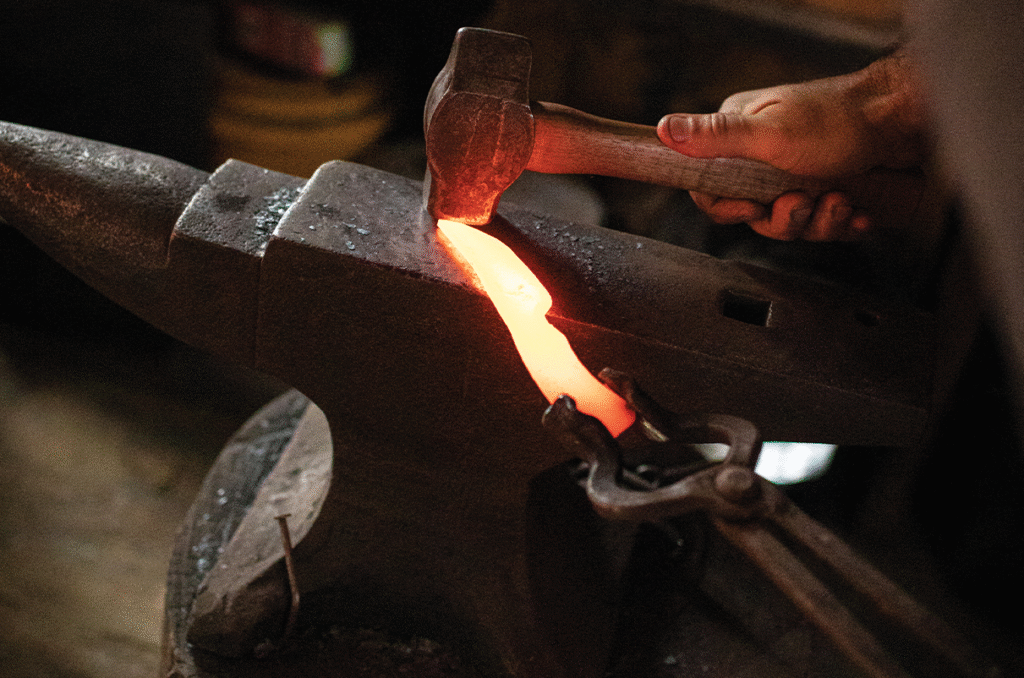
On walls, you see large blocks of color to anchor the viewer from across the street. On a knife, the equivalent might be bold inlays, contrasting materials, or a strong division between polished and matte zones that you can read in a quick glance.
In street work, there is often a base coat, then sketch, then fills, then outlines and highlights. On a knife, you’ll see something similar:
Graffiti writers talk about “flow” – how letters and arrows guide the eye. Knife engravers think just as much about flow, except they are directing the eye around a very small form, often using scrolls, waves, or geometric paths to move around screws, pivot points, and hardware.
So while the scale and tools change, the questions remain familiar to muralists:
Where does the eye start? Where does it rest? How does the story loop back on itself?
On the street, artists choose between rollers, spray caps, and markers. On metal, they choose between engraving, etching, and mechanical texturing. Each has parallels in public art practice.
Hand engraving
This is the closest cousin to drawing with a hardpoint. Using a graver pushed by hand or light hammer taps, the artist cuts lines into the steel. Depth and angle control how the line catches light. It is like incising into plaster or carving directly into a stone wall: permanent, precise, and unforgiving.
Etching (acid or electrochemical)
Etching uses a resist (the “mask”) and a chemical bath or electric current to bite the steel. Wherever the resist is missing, the surface is eaten away. This is essentially stencil work for metal: you design the positive and negative spaces on a mask, apply it to the blade, then let chemistry handle the “fill.”
Texturing (stippling, checkering, hammered finishes)
Here, the artist uses punches, rotary tools, or controlled impacts to add micro-craters, ridges, or crosshatch patterns. Under light, these act like the rough patches on a concrete wall – they trap shadows and make even small surfaces read as rich and dimensional from different angles.
The trade-offs are familiar to anyone who paints walls:
For artists moving between murals and metal, the surprise is often how much the steel “behaves” like a wall – it remembers every pass of the tool and every decision about where to leave the surface alone.
Stencil culture is one of the strongest bridges between street art and knife work. The workflow is almost identical: design, cut, mask, spray or etch, then peel.
On walls, stencils help artists:
On a knife, stencils and masks serve the same goals but at a smaller scale. Artists might:
Layering is where mural thinking becomes most visible on a knife. Instead of paint passes, the layers might be:
Every step changes the way light moves over the blade, the same way a glaze or final outline can suddenly make a wall piece “snap” into focus from the sidewalk.
Relief murals and sculptural wall pieces use real depth to play with shadows. Knife artists do the same thing in miniature.
With bulino engraving or deep relief carving, the surface isn’t just scratched – it is sculpted. Metal is removed to create hills and valleys, and then the high points are polished, while the low points are left matte or darkened. Under a single light source, this behaves almost exactly like a sunlit facade: strong highlights, mid-tones, and deep shadows.
Handles and bolsters offer even more options. Materials like bronze, silver, and titanium can be milled or carved to create:
Here again, there’s a trade-off:
Choosing higher relief increases visual drama and makes the piece read like a pocket sculpture, but it can catch on pockets, wear more quickly, and add weight. Lower relief stays more practical for a knife that will be carried daily but feels quieter in the hand.
The most successful “sculptures in steel” accept that tension rather than trying to erase it. They lean into the idea that this is both an artwork and a tool – a kind of traveling, private public art piece that moves through the city in someone’s pocket.
Public art discussions often revolve around consent, context, and who gets to decide what appears in shared space. Those questions don’t vanish when the “wall” becomes a knife.
In public, you might ask: Who owns this wall? Was the mural commissioned or painted illegally? How does the image sit with the neighborhood’s history?
On a knife, similar questions show up as:
Many of the most interesting knife projects are explicit collaborations between makers and visual artists: a blade-smith builds the form, a street artist or illustrator designs the imagery, and an engraver translates it to metal. The result is a genuinely hybrid piece – as much about urban culture as it is about craft.
There’s also a question of visibility. Murals are by definition public; anyone can stand in front of them. Custom knives tend to circulate in smaller circles of collectors, makers, and friends. Some workshops now bridge that gap by sharing high-resolution photos and process shots, so the visual language that started on the street can travel back into public view.
For readers who are curious what custom engraved knives as art look like in practice, a many makers on YouTube regularly document engraved and etched blades that translate storytelling, pattern work, and relief carving into pocket-scale objects. These images function almost like a traveling annex to the city’s walls – another place where line, texture, and narrative meet.
(As with all tools, it’s worth noting that knife laws and carry rules vary widely by region; this is a conversation about design and craft, not about self-defense or legality in any particular jurisdiction.)
You don’t need a full engraving studio to start thinking about knives as micro-canvases. The same DIY energy that fuels zines, stickers, and small stencil runs can be applied to affordable tools and everyday carry gear – as long as safety comes first.
Here are some accessible entry points that echo mural techniques:
1. Marker and paint-pen work on cheap blades or training tools
Just as blackbooks are safe spaces to develop letters, inexpensive blank tools or training knives can be used to test patterns and compositions. Oil-based paint pens handle steel well and let you explore flows, fills, and characters before you ever cut or etch.
2. Vinyl stencils and simple etching kits
Basic electro-etch setups, combined with plotter-cut or hand-cut vinyl stencils, give you a controlled way to add symbols and patterns to uncoated steel. The logic is exactly the same as a two-layer stencil mural, just condensed onto a couple of square inches.
3. Texture-focused projects
If you have access to basic metal tools and proper safety gear, texture-only projects – light stippling, hammered effects, or controlled sanding patterns – are a strong way to translate the feeling of a weathered wall to a knife handle or metal tag. These are less about figurative illustration and more about how light plays across a surface, which is central in both public art and blade craft.
Many public art fans already experiment with jewelry, paracord work, and charms. Techniques you test on pendants or bracelets can later migrate to knife hardware or lanyard beads, and vice versa. In that sense, the pocket becomes a rotating gallery of small public art experiments that travel on a person rather than on a wall.
Whatever path you choose, the same principles apply that govern responsible street work: credit your influences, avoid copying other artists’ signatures or characters without permission, and treat the object as a carrier of stories, not just decoration.
When you look closely, custom knives and city walls are not as far apart as they seem. Both are platforms where artists test how far line, texture, and light can go on a fixed surface. Both rely on layering, masking, and relief to guide the viewer’s eye. Both raise questions about ownership, authorship, and the relationship between everyday life and art.
Custom engraved knives as art take the visual vocabulary of murals – stencils, layers, ghost lines, and sculptural depth – and compress it into a form that fits in your hand. For some artists, that shift of scale opens new possibilities: you can carry a story instead of just passing by it. For collectors and DIY makers, it’s an invitation to see tools as more than tools, to treat steel and hardware as another chapter in the wider narrative of public art.
In a city where walls are constantly being painted, buffed, and repainted, these small, portable canvases offer a different kind of continuity. They move through subway cars, workshops, and studio tables, quietly echoing the same questions that animate murals outside: Who are we? What do we mark? And how does art change the way we move through the streets we share?
